If you drive in Sherwood Park, your engine has a harder life than the ads suggest. Frosty starts, quick runs to the store, sanded roads and long stretches on the Yellowhead all add up.
So when is it really time for an oil change? It is one of the most common car care questions, and the honest answer depends on how you drive.
Change your oil at the interval in your owner’s manual or when your maintenance reminder comes on. In Alberta, many drivers fall under the severe service schedule because of extreme cold, short trips, idling, gravel roads or towing. If that sounds like your week, follow the shorter interval, and check your oil level between changes.
Why there is no single number anymore
Older advice gave everyone the same rule. Modern engines, oils and filters are different, and carmakers now set their own intervals for each engine. Some vehicles also have an oil life monitor that estimates when the oil is worn out based on how you drive.
That is why the best starting point is always your owner’s manual, the sticker on your windshield or the reminder on your dash. Not a number a friend swears by.
Normal or severe: which schedule fits Alberta driving?
Most owner’s manuals list two maintenance schedules. One is for normal driving. The other is often called severe, special or extreme conditions, and it asks for oil changes sooner.
The surprise for a lot of people is how ordinary “severe” driving is here. Check your manual, but these conditions often put you on the shorter schedule.
Cold starts and deep freezes
When your vehicle sits outside on a minus 30 morning, the oil is thick and slow to move at start up. Those first moments after a cold start are hard on an engine. A block heater helps, and so does oil that is still in good shape.
Short trips around town
A quick drive to school, the arena or the grocery store may never let your engine fully warm up. Moisture and fuel that would normally burn off can stay in the oil and break it down faster. Plenty of Sherwood Park driving looks exactly like this.
Idling and remote starts
Letting your vehicle idle to warm up adds engine hours without adding kilometres. If you only go by distance, a winter of idling can hide a lot of wear.
Dust, gravel and towing
Gravel roads across Strathcona County, dusty acreage driveways, towing a trailer to the lake or hauling a full load all count as harder work for your engine and its oil.
If two or three of these describe your week, the severe schedule is probably the right one for you. If you mostly cruise the highway in mild weather, the normal schedule may fit. When you are not sure, ask us and we will help you choose.
Signs your oil needs attention sooner
Your reminder light is the main cue, but watch for these too:
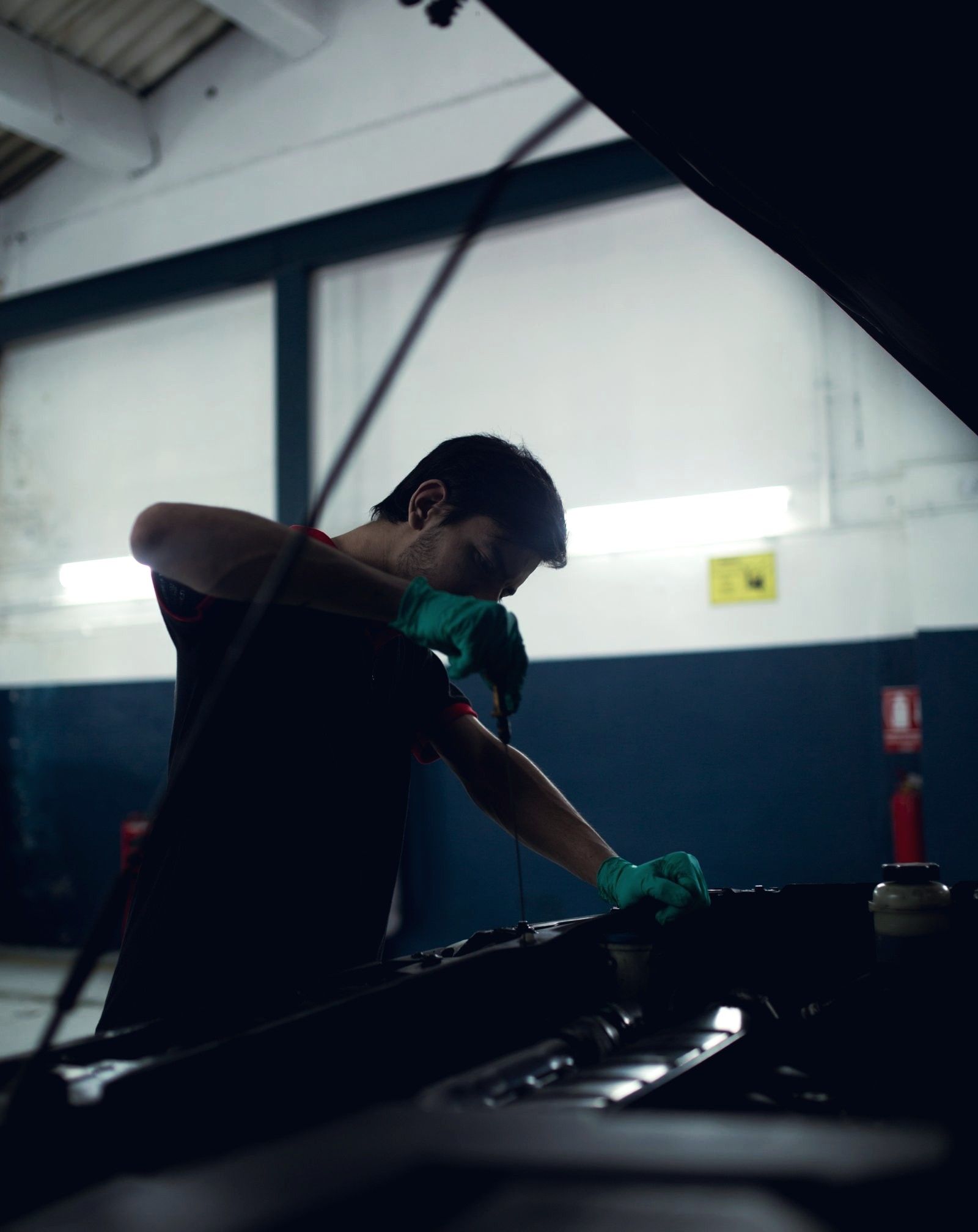
- The oil level is low on the dipstick, or you keep needing to top it up
- The oil looks very dark and gritty, or feels sludgy
- The oil pressure warning light comes on (pull over safely and turn the engine off)
- You hear more ticking or knocking from the engine than usual
- You smell burning oil, or see blue smoke from the exhaust
- The date or distance on your windshield sticker has passed
Dark oil on its own does not always mean it is due, because fresh oil darkens as it cleans. Low oil, though, should never be ignored.
Why fresh oil matters more in the cold
Oil does several jobs at once. It keeps metal parts from rubbing together, carries heat away and holds dirt so the filter can catch it. As oil ages, it breaks down, gets dirty and does all of those jobs less well.
In a place with real winters, that matters. Worn oil can be slower to flow on a cold start, which is exactly when your engine needs protection most. Keeping up with oil changes is one of the simplest ways to help your engine last.
The right oil, not just any oil
Your owner’s manual lists the oil grade and type your engine was designed for, and many newer engines call for full synthetic. The grade matters because it describes how the oil flows when it is cold and when it is hot.
At Full Service Automotive we use the oil type and grade your vehicle’s manufacturer calls for. We do not guess, and we do not swap in something cheaper.
Your quick oil change checklist
Before your next service, run through this list:
- Find your owner’s manual and note which schedule fits how you drive
- Check your windshield sticker or last receipt for the due date and distance
- Check the oil level on flat ground with the engine off
- Look for warning lights, drips under your parking spot or new engine noises
- Make sure your block heater cord is in good shape before winter
- Book your oil change before a long road trip, not after
What we check during an oil change
An oil change is a good chance to look over the basics. When you book with us, we:
- Change the oil and filter with the right grade for your engine
- Check and top up your fluids
- Look over the air filter, cabin filter, belts, hoses and wipers
- Check tire pressure and tread
- Reset your maintenance reminder
- Tell you what else is coming due, with an estimate before anything extra
Nothing extra gets done without your okay. If something can wait, we tell you.
Learn more about our maintenance, servicing and inspections, including a seasonal check before winter. If your vehicle has been slow to start on cold mornings, ask us to test your battery and charging system at the same time.
Book your next oil change in Sherwood Park
Full Service Automotive is at Unit 160, 167 Provincial Ave in Sherwood Park, just off the Yellowhead (Highway 16) near Millennium Place. We look after cars, trucks and SUVs for drivers from Sherwood Park, Strathcona County and east Edmonton. If you are due, or not sure which schedule fits you, send us a booking request and we will get back to you to set up a time that works.