Your brakes are the one system you never want to second guess. The good news is that brakes usually give you warning before they become a real problem. You just need to know what to listen and feel for.
Here is a plain guide to the signs, what they usually mean, and why driving in Sherwood Park is tougher on brakes than you might think.
Your brakes need attention if you hear squealing or grinding, feel a pulsing or soft pedal, notice the vehicle pulling to one side when you stop, or see the brake warning light. In Alberta, salt, sand and freeze and thaw cycles wear brake parts faster, so a check each fall and spring is a smart habit.
The sounds your brakes make
Squealing or squeaking
Many brake pads have a small metal tab called a wear indicator. When the pad gets thin, the tab touches the rotor and squeals to get your attention.
Squealing can also come from moisture, dust or glazed pads, especially on cold mornings. If it fades after a few stops, it may be nothing. If it keeps happening, have it checked.
Grinding or scraping
Grinding is more serious. It often means the pad material is gone and metal is rubbing on metal. That damages the rotor and makes your brakes less effective. Book a brake check soon and keep your driving to a minimum until then.
Clicking or rattling
A click or rattle when you brake can point to loose hardware, a worn caliper slide or a part that has shifted. It is worth a look before it turns into something bigger.
What your brake pedal is telling you
A pulsing pedal or shaking steering wheel
If the pedal pulses or the steering wheel shakes when you brake, especially at highway speed, your rotors may be worn unevenly. On a hard stop on ice, a pulsing pedal can also be your antilock brakes doing their job, which is normal.
A soft or spongy pedal
A pedal that feels soft, sinks lower than usual or needs more pressure to stop can mean air or moisture in the fluid, a leak or a problem in the hydraulic system. This one is a safety issue. Have it checked right away.
A hard pedal
If you suddenly need to push much harder to stop, the brake booster may not be helping the way it should. Get it looked at soon.
Other warning signs
- The vehicle pulls to one side when you brake, which can mean a sticking caliper or uneven pad wear
- The brake warning light stays on after you release the parking brake
- A sharp, hot burning smell after normal driving
- One wheel is much dustier or hotter than the others
- Fluid near a wheel or under the vehicle
Why Alberta winters are hard on brakes
Brakes do not only wear from stopping. Road salt and sand get packed into calipers and brackets. Moisture and freeze and thaw cycles bring rust to rotors and slides. Calipers can seize, and pads can wear unevenly when parts stop moving freely.
Add stop and go traffic on Baseline Road and Wye Road, cold starts and spring potholes, and brake parts here face a lot. That is why many drivers have their brakes checked in the fall before the snow flies, and again in spring after a winter of salt.
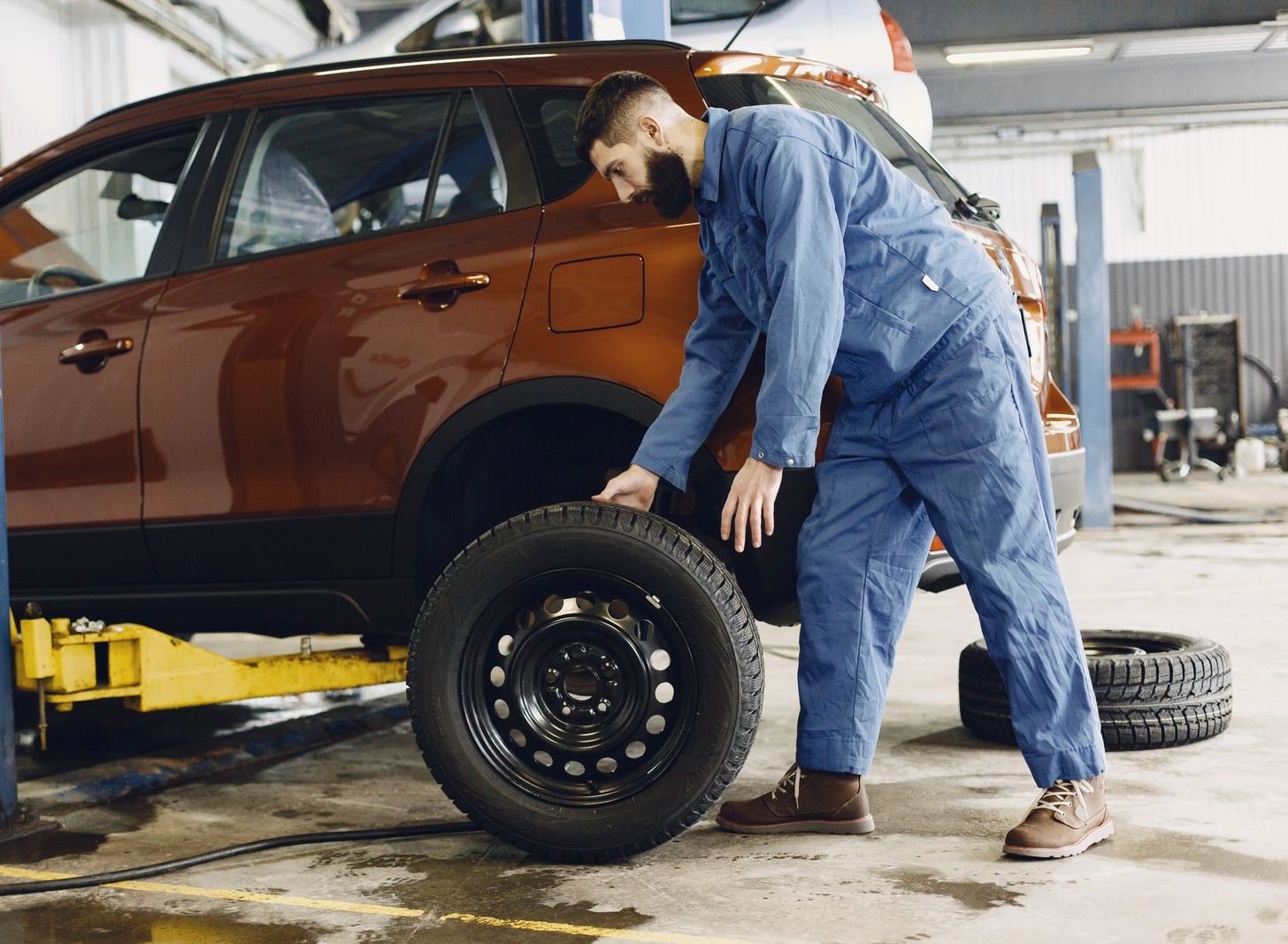
A seasonal tire change is a great time for it, because the wheels are already off. If you are booking your changeover now, read our guide on when to switch to winter tires.
Pads, rotors, calipers and fluid: what gets checked
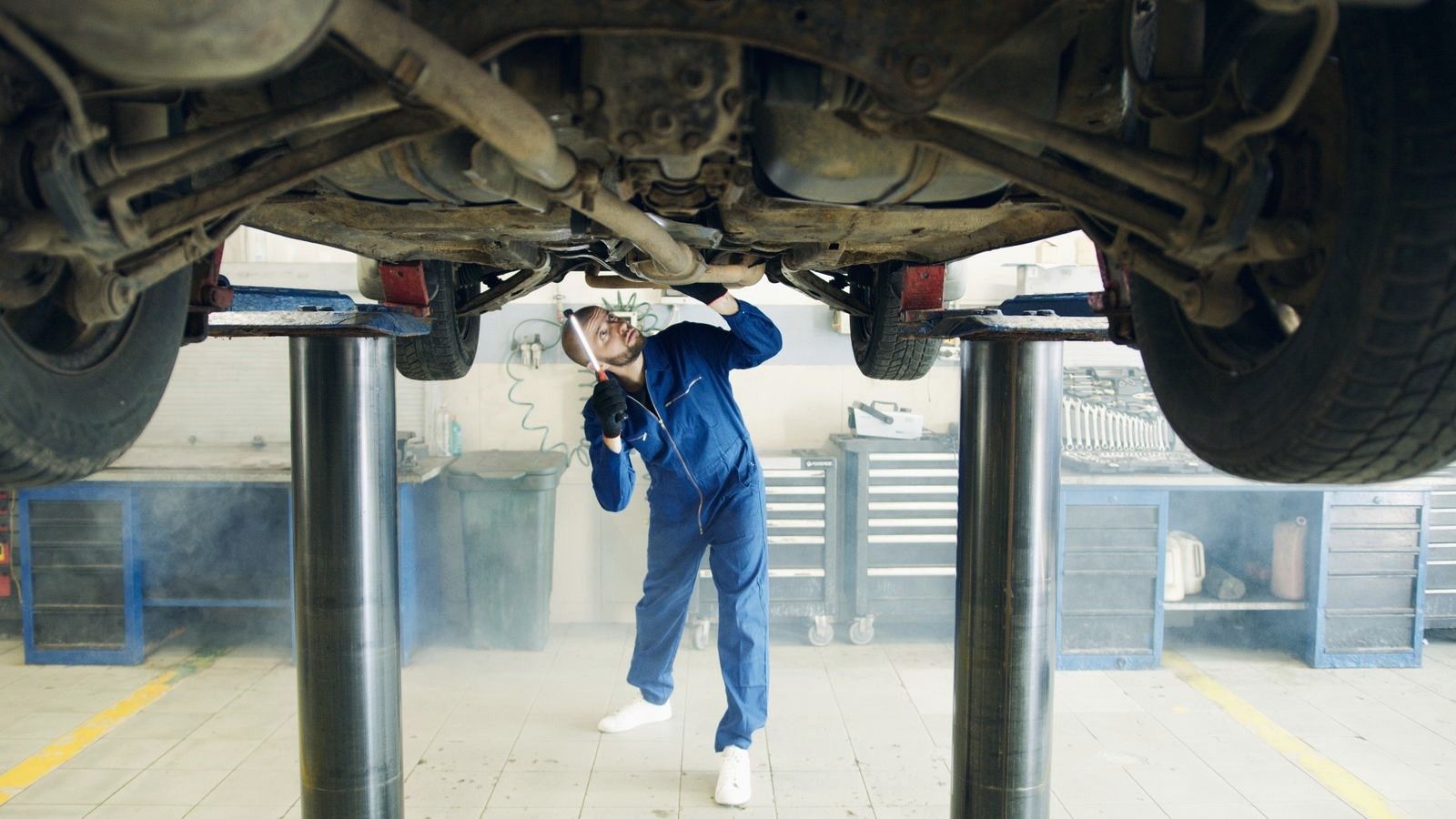
A proper brake inspection looks at the whole system, not only the pads.
Pads
We measure how much pad material is left, and look for uneven wear that points to another problem.
Rotors
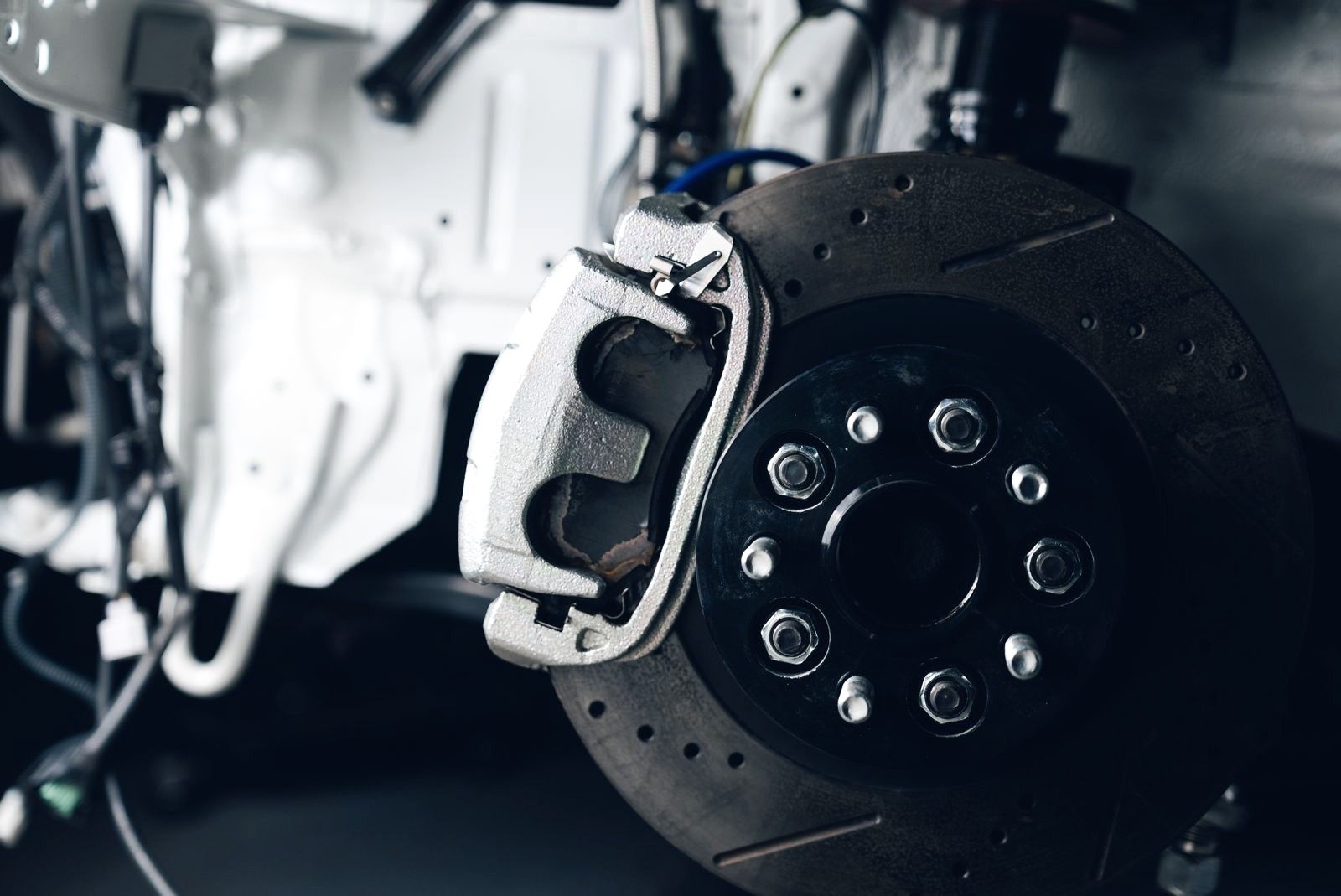
We look for grooves, uneven wear and rust, and check them against spec. You do not always need new rotors with new pads. If your rotors are still within spec, we tell you. If they need replacing, we explain why before any work.
Calipers, hoses and lines
We check that calipers move freely and are not leaking or sticking, and look over hoses and lines for cracks, rust and leaks.
Brake fluid
We check the level and the condition of your fluid, since brake fluid absorbs moisture over time.
Your quick brake checklist
Before winter, take two minutes and ask yourself:
- Do my brakes squeal, grind or click?
- Does the pedal feel the same as it always has?
- Does the vehicle stop straight, without pulling?
- Is any warning light on?
- Do I remember when my brakes were last checked?
If any answer makes you pause, it is time for a look.
How we handle brake work
At Full Service Automotive we inspect before we recommend anything. We show you what is worn, explain it in plain words and give you a clear estimate before we replace anything. If something can wait, we tell you. We call you before doing anything that was not on the estimate.
Read more about our brake repair in Sherwood Park. If your vehicle also clunks over bumps or wanders on the highway, our suspension, steering and alignments page explains what to watch for. A pre trip or seasonal inspection covers your brakes along with the rest of your vehicle before a long drive or a new season.
Book a brake check in Sherwood Park
If your brakes feel or sound different, do not wait for it to get worse. Full Service Automotive is at Unit 160, 167 Provincial Ave in Sherwood Park, just off the Yellowhead (Highway 16) near Millennium Place, and we look after drivers from Sherwood Park, Strathcona County and east Edmonton. Send us a booking request, tell us what you are hearing or feeling, and we will get back to you to set up a time.